


In the global push for food security and climate-resilient farming, few alignments hold as much structural promise as the emerging corridor between South America’s agricultural titan and Southern Africa’s breadbasket-in-the-making. Speak to any observer of South-South trade, and the consensus is clear: the playbook developed for farming in the tropics is about to find its next major test ground in Lusaka.
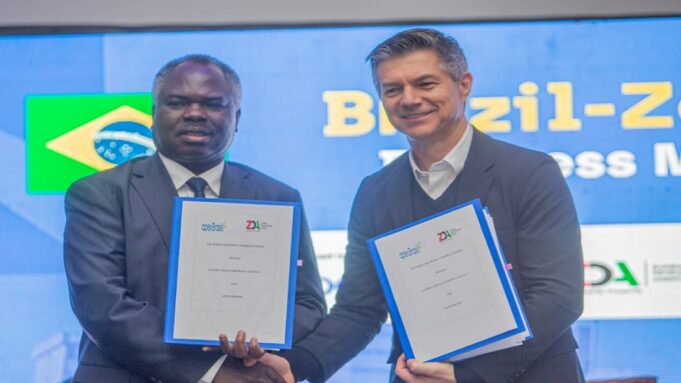
Speaking at the Brazil-Zambia Business Forum co-hosted in the Zambian capital by the Zambia Development Agency (ZDA), ApexBrasil, and the Brazilian Embassy under the banner of ‘Cooperation, Trade, and Investments’ ApexBrasil President Laudemir Muller outlined an expansive vision for cross-continental ag-tech transfer. Rather than viewing Africa strictly through the lens of import-export balances, Muller positioned Brazilian expertise as a catalyst for local structural transformation.
“We see a great synergy between our countries. Zambia seeks to raise productivity and modernise its agriculture, and Brazil is the natural partner for this jump.” President of Apex Brasil
Despite trade between the two nations reaching $47.5 million in 2025, officials from both capital cities acknowledge that current figures barely scratch the surface of commercial potential. To bridge that gap, Brazil’s value proposition centers on hard-won domestic expertise: providing specialized machinery, bio-inputs, advanced animal genetics, and crop management systems specifically engineered for tropical soil chemistry and climate conditions.
The commercial rationale extends well beyond field-level productivity. With Zambia navigating power constraints, the Brazilian delegation highlighted integrated solutions spanning biomass, biofuels, and renewable microgrids designed to stabilize off-grid processing hubs. The aim is to move Zambia up the value chain from primary production to domestic agro-processing, keeping value-addition local while diversifying energy inputs.
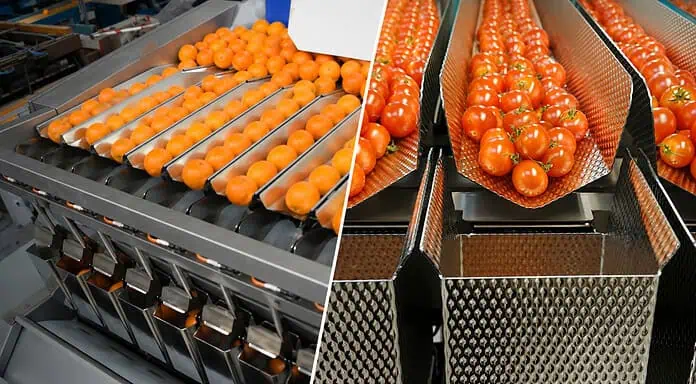
“Brazil is ready to provide specialised machinery and transfer technology so that Zambia is able to process its own materials and increase its domestic supply. When we strengthen our trade flows, we are, in practice, generating more income, creating quality jobs, and promoting productive inclusion.” Laudemir Muller, President of ApexBrasil
Institutional momentum is already accelerating. A newly inked Memorandum of Understanding between ApexBrasil and the ZDA seeks to formalize business-to-business pipelines, smoothing entry for machinery manufacturers and genetics suppliers. The private sector is already responding of the 30 Brazilian firms currently exporting to Zambia, nearly half entered the market within the past 12 months alone.
This bilateral push reflects a broader strategic realignment under President Luiz Inácio Lula da Silva’s administration to reinvigorate trade with the African continent. After peaking at $28 billion in 2013 and bottoming at $11.5 billion in 2020, Brazil-Africa trade rebounded sharply to $24 billion in 2025. As global supply chains prioritize regional resilience, Africa’s demographic trajectory, abundant arable land, and critical minerals have elevated partners like Zambia from peripheral targets to strategic anchors.




Leave a Reply