



When Augustine “Pan” Nemasisi returned home to Louis Trichardt in Limpopo in 2015 after failing to secure a job in Johannesburg, farming was not part of a grand career plan. Like many other young South Africans, he had gone to the city hoping to find work, but when opportunities failed to materialise, he came back to his family’s farm in Louis Trichardt, determined to make the best of what was available.
By Maile Matsimela, digital editor at African Farming
His parents kept chickens, and part of the property was planted with guava and pear trees. Rather than wait for another opportunity, he decided to create one himself. “I came back home and thought, let me just try planting and see how everything goes.” That decision proved to be life-changing.
With just one hectare available at the time, Augustine planted 10 000 cabbage seedlings. When harvest time arrived, he sold the entire crop within three days. “For me, that was the motivation. I thought, if I can sell 10 000 cabbages in three days, then this thing is possible.”
Instead of continuing his search for other employment, he began looking at farming as a business capable of providing both a livelihood and long-term growth.
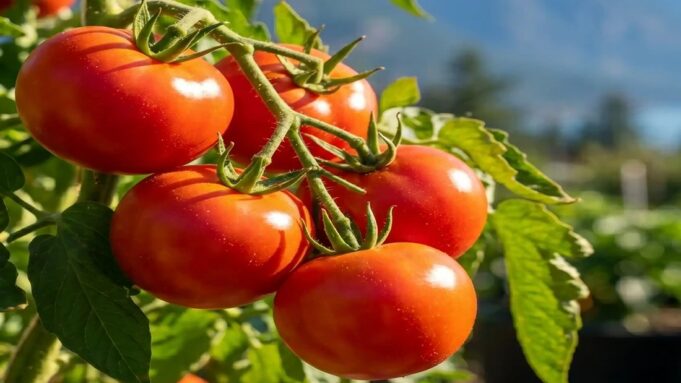
Today, the man widely known as “Pan the Farmer” cultivates an 8.9-hectare family farm, producing vegetables for informal traders, feeding schemes and local supermarkets. He built a respected name in vegetable production, earning recognition from Productivity SA after his farming enterprise distinguished itself in the Commercial Farming category.

Building a business around cabbages
Success did not persuade Augustine to chase every crop with a promising market. Instead, it taught him the importance of mastering one commodity before expanding into others. The cabbage that launched his farming career remains the backbone of his business today, even though he also grows spinach, mustard greens, green peppers, butternuts and maize.
As demand increased, the farm began to change. Fruit trees gradually made way for vegetable production as more land was brought under cultivation. One successful field became two, and eventually almost the entire farm was transformed into productive land.
His production programme follows the rhythm of the seasons. “Winter in this part of Limpopo can be surprisingly cold, limiting the number of crops that can be grown successfully,” he says. During these months, he concentrates mainly on cabbage, spinach and mustard greens, ensuring regular customers continue receiving fresh produce. As temperatures rise from late August into spring, production expands to include green peppers, butternuts and maize, while cabbage production continues year-round.
Maintaining continuity has become a core principle. Rather than planting one large crop and waiting until it has been harvested before planting again, Augustine staggers production so a new field is already developing before another reaches maturity. “But I always try to have cabbages. If you lose your main crop, you lose your identity.”

Refining a production system that works
Every crop begins long before seedlings are transplanted – with careful attention paid to soil preparation, irrigation planning and field layout. Years of trial and error have taught Augustine that cutting corners at the beginning almost always leads to problems later.
He first ploughs his fields before discing to break up the soil. Once discing is completed, ridges are formed and carefully levelled to ensure irrigation water flows evenly throughout. Only then are the irrigation pipes installed. The final step before planting is applying basal fertiliser and irrigating the field overnight to confirm water reaches every planting position.
“I water the whole field before planting so I can see how far the water reaches. That way I know every cabbage will receive enough water once it is transplanted.”
The practice may appear simple, but it allows him to identify blocked drippers, uneven water distribution or pressure problems before seedlings are planted.

Why drip irrigation makes business sense
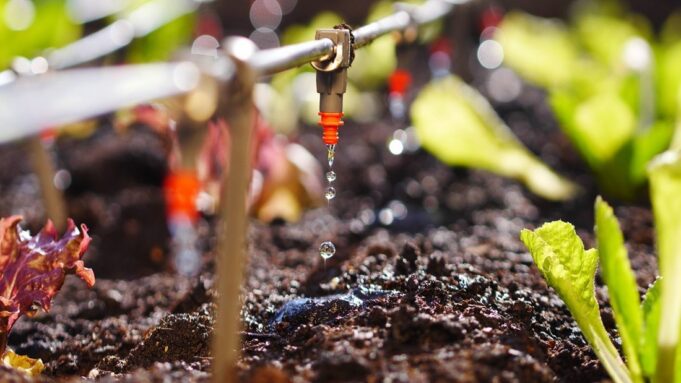
Unlike many other vegetable producers who still rely on overhead sprinklers, Augustine has adopted drip irrigation throughout his operation. The decision is not only about saving water, but also about improving crop management and reducing unnecessary labour.
Drip irrigation gives him precise control over the amount of water each plant receives while keeping the spaces between rows relatively dry. This significantly reduces weed growth, meaning workers spend less time removing weeds and more time on productive activities. It also allows fertiliser to be delivered directly through the irrigation system, ensuring nutrients are placed exactly where the crop needs them. “Plants cannot survive if their roots stay under water all the time. With drip irrigation you control exactly how much water they receive.”
The farm draws its irrigation water from two boreholes, each drilled to about 100 m deep. Although both are capable of supplying water, one borehole currently provides sufficient capacity to irrigate the entire vegetable enterprise through a high-capacity pump. Having a reliable water source has made the business less dependent on rainfall.
Augustine concedes that rain often creates more problems than it solves as heavy downpours can damage crops, delay field operations and encourage disease outbreaks.

Choosing varieties for performance
Over the years, Augustine has experimented with different cabbage varieties before settling on those best suited to his production system and market requirements. Among his current favourites is Megaton, a hybrid variety he prefers during winter because of its vigour, large head size and resilience under challenging conditions. “It grows very big and the head is visible. You can see from far away that the cabbages are developing well.”
Despite his appreciation for Megaton, his preferred variety is Conquistador. He values its flexibility, saying it can be adapted to suit different market windows and, under favourable conditions, harvested in as little as two months and three weeks. Cost is another consideration, with Conquistador generally offering a more affordable option without sacrificing performance.
Variety selection should never be based solely on popularity, he says. Instead, farmers need to understand how each cultivar performs under local conditions, responds to disease pressure and fits into their production calendar.
This is the first of a three-part series on Augustine “Pan” Nemasisi. Next, he explains how he finds his markets before the harvest and turns social media into a selling tool.


Leave a Reply